Beat the rise! Delivery fees are going up soon. INFO


Dr. David W. Onstad has been an entomologist for over 40 years focusing on insect resistance management, insect epizootiology, economics of integrated pest management, and ecological modeling. He was elected fellow of the Entomological Society of America in 2022. Since retiring after 26 years as a professor at the University of Illinois, he has been the lead mathematical modeler for DuPont Pioneer/CortevaAgriscience in support of data-driven strategic decision-making, assessing resistance risks, and product registration and development of transgenic insecticidal crops. Dr. Lisa Knolhoff works in the field of agricultural biotechnology and has over 20 years of experience with arthropod pests of agricultural and medical importance. Her background includes insect behavior, genetics, and evolution, and she has worked in academia, private industry, and government. She has focused on insect adaptation to cropping practices, alternative host plants, and transgenic insecticidal crops. She reviews potential impacts of biotechnology in agriculture and has served as an invited consultant on topics related to gene drives and genetically engineered organisms. Dr. Knolhoff contributed to this volume in a personal capacity. The views expressed do not necessarily represent the views of the United States Department of Agriculture, its agencies, or the government of the United States of America.
Advances in Tropical Crop Protection...
Hardback
$445.95 $356.62
Not in-store but you can order this
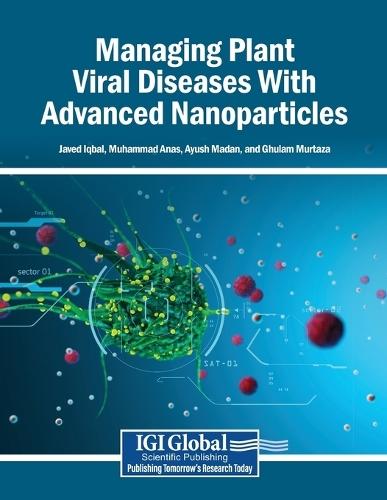
Managing Plant Viral Diseases With...
Paperback
$538.95 $430.99
Not in-store but you can order this
Instant Insights
Managing Arthropod Pests in Cereals...
Paperback
$100.95 $80.63
Not in-store but you can order this
An Account of the Insects Noxious...
Paperback
$44.95 $37.88
Not in-store but you can order this
Pests to Peace
Military-grade pest control secrets...
Paperback
$38.95 $32.71
Not in-store but you can order this